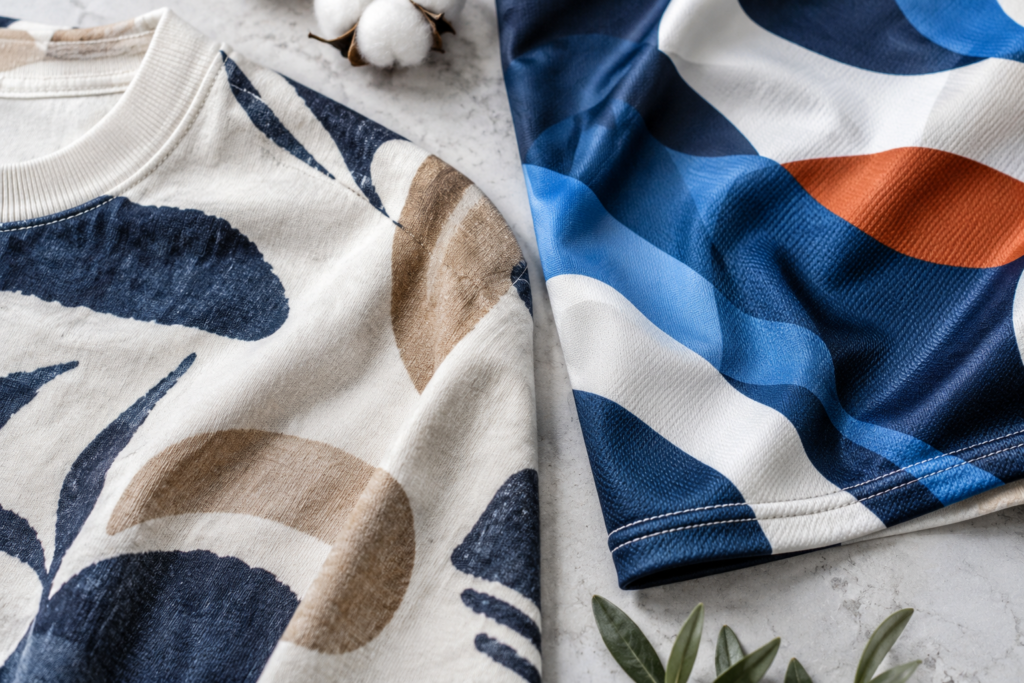
Choose the fabric and intended use before choosing the print process. A cotton-rich all-over-print garment may suit a fashion collection built around a cotton hand feel; polyester sublimation is a common route for suitable polyester sportswear and accessories. Both can carry full-surface artwork, but they are not interchangeable production methods.
First, separate print coverage from print chemistry
“All-over print” describes how much of the product carries the design. It does not tell you which ink or process is used. A pattern can cover cut fabric panels before sewing, while the appropriate printing process depends on the textile. Dye sublimation is designed for suitable polyester or polyester-coated surfaces; it is not a standard way to print untreated cotton. Cotton-rich fabrics need a compatible process, which can include pigment direct-to-fabric printing, depending on the supplier and item.
That is why a product called “AOP hoodie” still needs a material and process check. Print Logistic’s catalog, for example, lists both a cotton-rich all-over-print hoodie and a polyester all-over-print hoodie. Their artwork coverage may look similar on screen, but the fabric composition and production route differ.
Where each route tends to fit
| Decision | Cotton-rich all-over print | Polyester sublimation |
|---|---|---|
| Typical product idea | Fashion T-shirts, sweatshirts and cotton-feel apparel. | Sports jerseys, activewear and suitable polyester accessories. |
| Material starting point | Cotton or cotton-rich fabric with a verified compatible process. | Polyester or a suitably coated product. |
| What to sample | Fabric hand, color, coverage and how the design meets seams. | Fabric performance, color, coverage and how the design meets seams. |
| Main mistake to avoid | Assuming “AOP” automatically means sublimation. | Assuming sublimation works the same way on untreated cotton. |
Start with the product, not the mockup
For a cotton-feel streetwear hoodie, confirm the exact fiber blend, weight and available sizes. For a sports jersey, check the polyester fabric, cut and intended use. Compare the real garment against the audience’s expectations: drape, weight, comfort and care matter as much as the design. The current Print Logistic catalog includes cotton-rich AOP hoodies and polyester AOP sports jerseys, which makes these useful sample candidates rather than interchangeable substitutes.
Prepare artwork for the physical item
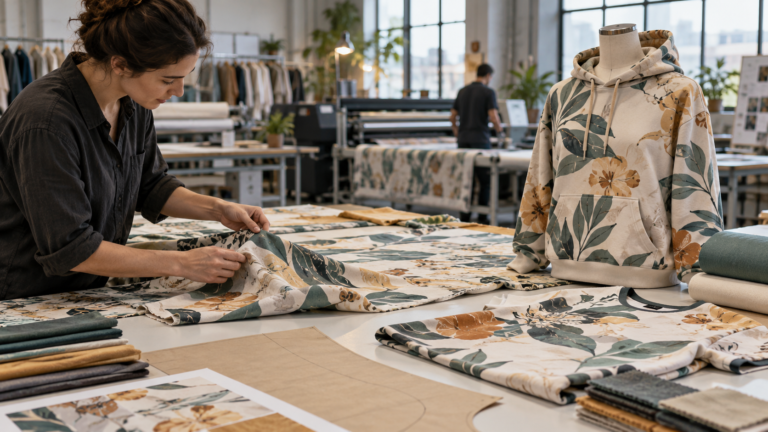
On a cut-and-sew product, artwork can cross front, back, sleeves and seams. A flat mockup may hide shifts near stitching, hems or size changes. Ask for the supplier’s template for the selected SKU. Keep important text and faces away from joins; check scale and repeat across sizes; and approve a physical sample before listing the item as a finished collection piece. The correct file setup depends on the product and print line, so use the actual production template instead of one universal AOP file.
Compare samples using the same design
If you are unsure which route fits your brand, sample one design on two relevant products. Review the fabric hand, color under normal light, print coverage, seam placement, fit and wash-care label. Photograph both samples in the same conditions and use the product you approve as the reference for future orders. This gives your team a concrete answer based on the item customers will receive.
Questions to ask before you place an order
- What is the exact fabric composition of this SKU?
- Which print process is used for this material and design?
- Is the product printed as panels, as a finished garment or by another route?
- Which template and safe areas should the designer use?
- Can we approve a physical sample before launch?
For a broad overview of available methods, see our guide to clothing printing techniques. Then explore the product catalog and ask the production team to confirm the best process for your chosen garment and artwork.