Garment selection guide
The best T-shirt blanks for printing are the ones that support your artwork, decoration method and intended fit consistently. A product that feels good before decoration still needs to be tested as a finished printed garment. Fibre composition, surface texture, colour and supplier continuity all belong in the decision.
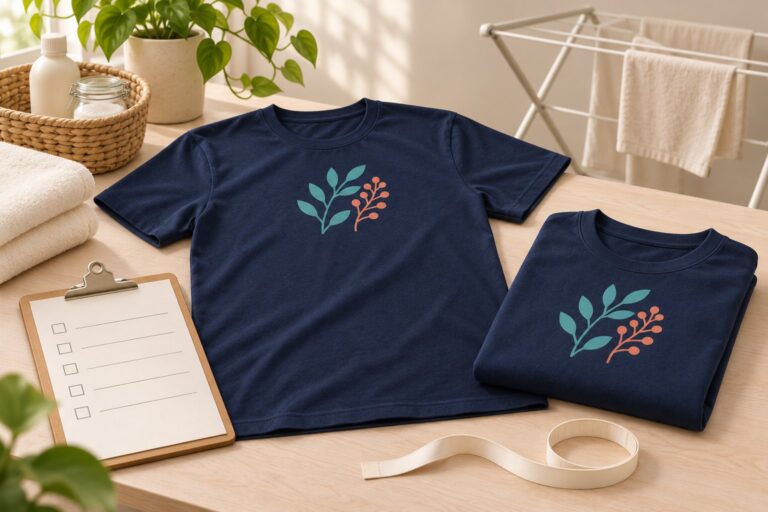
Start with a short product brief: who will wear the shirt, what it should feel like, where the print will sit and how the customer will care for it. Then compare a small number of candidates using the same artwork. This produces a more useful decision than choosing on price or fabric weight alone.
What is a blank T-shirt?
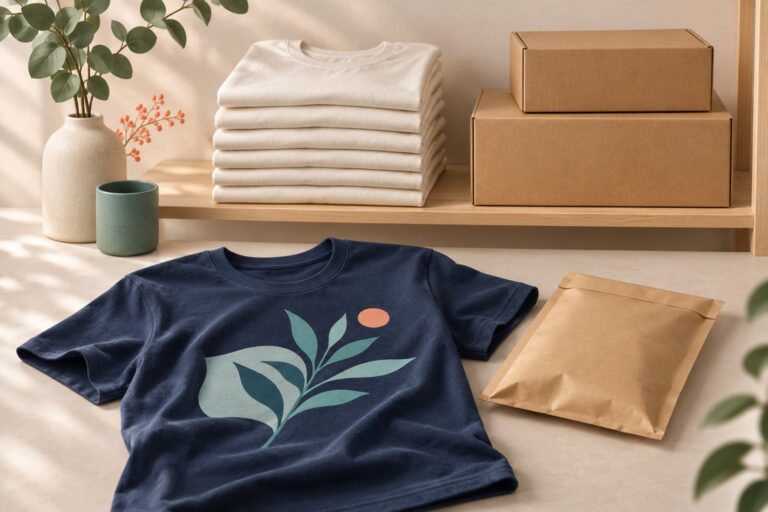
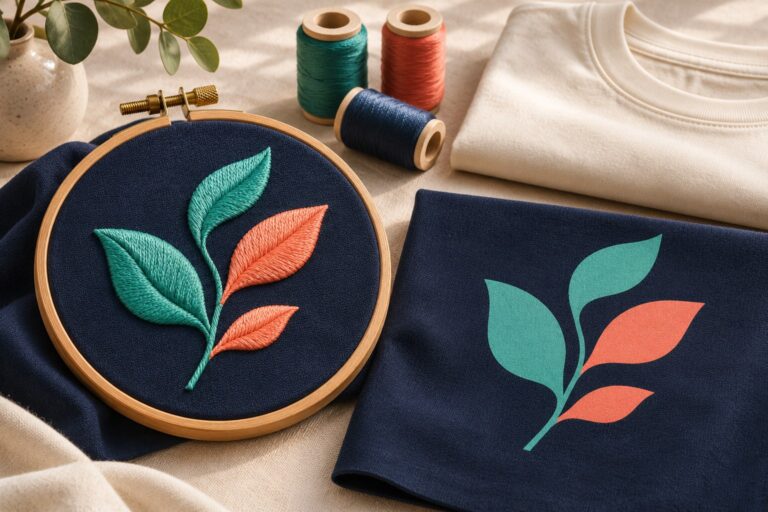
A blank is a finished garment supplied without your decoration. You add the artwork through a suitable process, such as direct-to-garment printing, a transfer, screen printing or embroidery. The blank already determines the cut, seams, neckline, fabric and available colour range.
That differs from printing fabric before cutting and sewing a garment. If artwork must continue across large panels or cover the full garment, see our guide to cotton all-over-print manufacturing. A standard chest print on a finished blank and a cut-and-sew all-over product require different production planning.
Compare cotton, cotton blends and polyester
| Blank type | Why consider it? | What to verify? |
|---|---|---|
| Cotton jersey | A common starting point for everyday graphic T-shirts. | Surface smoothness, exact colour, shrinkage and the printer’s approved process. |
| Cotton/polyester blend | A different balance of feel, appearance and garment performance. | Fibre content for the specific colour, print result and heat compatibility. |
| Tri-blend | Often selected for a soft, heathered or more relaxed visual effect. | The actual fibre mix, opacity and whether the intended print looks too muted. |
| Polyester performance fabric | Useful where the garment brief prioritises a performance fabric. | A process approved for that fabric and colour, including migration and heat testing. |
Do not treat a blend ratio as a complete technical specification. Gildan’s American Apparel fabric guide distinguishes decoration suitability across jersey, sueded fabric, tri-blends and other constructions. Two fabrics with similar headline composition can have different recommendations.
Look at the surface that will actually receive the print
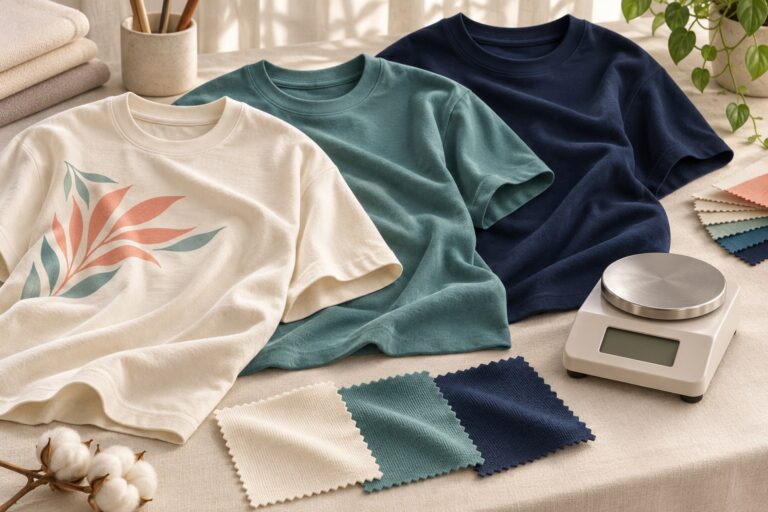
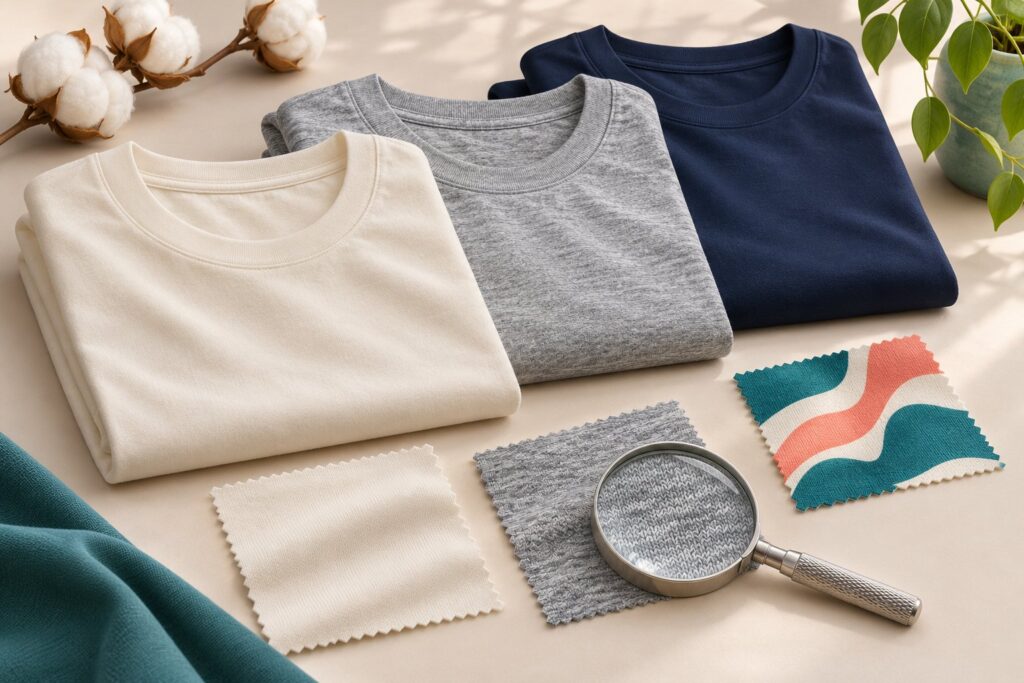
For detailed artwork, inspect the face of the fabric closely. A smooth, even surface is a useful starting point for clean reproduction; a more textured surface can change how fine lines and small lettering appear. Gildan’s decorator guidance highlights smooth, tight-knit surfaces and the need to consider dye migration when printing polyester-containing garments.
Ring-spun describes how the yarn is made. Combed describes an additional fibre preparation step. Neither word, on its own, promises the result of a particular print. Use those descriptions to shortlist candidates, then compare the actual garment with the actual design.
For a large solid graphic, judge print feel as well as edge sharpness. For a fine logo, inspect the smallest letters at normal viewing distance. A design that passes on a light colour may need a different preparation or appearance approval on a dark one.
Match the blank to the decoration process
Ask the production partner which garment-and-colour combinations they have approved for the proposed process. Cotton is a common starting point for DTG, while polyester and blends can require different equipment, ink and preparation. Specialist polyester DTG systems exist: Kornit’s Atlas MAX POLY is one example. This does not mean every DTG production line can print every polyester shirt.
Transfer printing also needs compatible fabric and controlled application. Check whether heat leaves a visible mark, changes the fabric or affects the print colour. Avoid copying a universal time-and-temperature recipe from another garment. The production team should work from its approved equipment and material settings.
Our DTG versus DTF comparison explains the process choice. Use this blank-selection guide to define the garment that will enter that process.
Check the exact colour, not just the style name
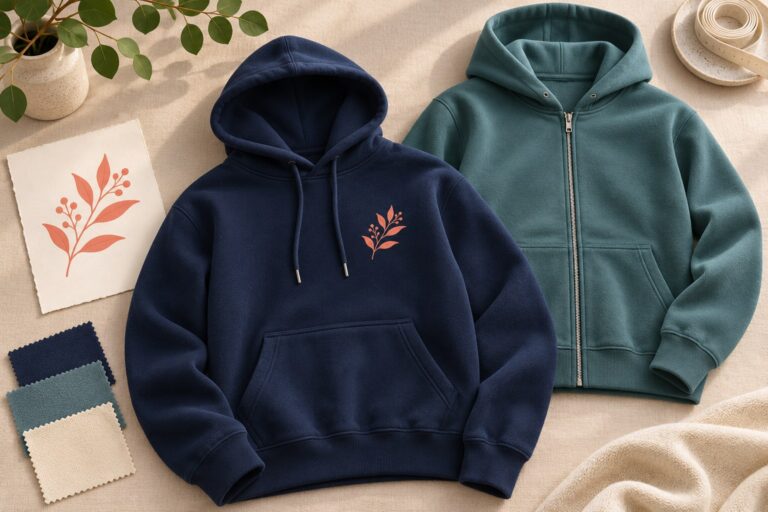
A style can use different fibre compositions across solid colours, heathers or special finishes. Read the technical sheet for the colour you plan to sell. Do not approve a white sample and assume every colour in the range has the same composition or printed appearance.
Include the planned light and dark colours in your sample brief. Where a heathered effect is part of the product identity, decide whether the fabric should remain visible through the print or whether you need a more opaque result. Photograph the approved garment in consistent light for your internal reference.
Choose weight and fit as separate decisions
GSM describes fabric mass per square metre. It does not tell you the entire cut, opacity, print compatibility or quality of a shirt. A heavier blank can still have a rougher surface or an unsuitable fit for your audience. For weight ranges and the questions to ask about them, use our T-shirt GSM guide.
Compare chest width, body length, sleeve shape and shoulder position using the supplier’s measurement method. Check more than one size if the collection spans a broad range. A chest graphic that looks balanced on a medium sample may need a placement decision for the smallest and largest sizes.
Record the measurements of the finished sample before and after its approved wash test. If your customer-facing size chart uses garment measurements, keep it consistent with the measuring method and allow for the tolerances supplied by the manufacturer.
Assess supply continuity before expanding the colour range
A good sample needs a reliable replenishment plan. Ask which sizes and colours are normally available, how shortages are communicated and whether a substitute can be introduced only after your approval. A similar-looking blank can differ in length, hand feel or print result.
Keep a record of the manufacturer, style code, colour code, fabric specification, approved print route and artwork version. If a replacement blank becomes necessary, treat it as a new approval decision rather than silently inheriting the original sample’s acceptance.
Build a sample brief that answers the important questions
- Garment: exact style, colour and sizes, with the relevant technical sheet.
- Artwork: final file, dimensions and placement reference, including the smallest details that must remain legible.
- Appearance: expected opacity, feel and acceptable variation from the digital mockup.
- Wear and care: intended use and the finished garment’s approved care instructions.
- Approval: named reference sample and a clear decision on any visible defects or size issues.
Use our sample approval checklist to document the decision. For the laundering stage, follow the printed T-shirt wash-testing and care guide.
Shortlist the blank before scaling the collection
Browse the Print Logistic product catalog and discuss the exact garment, colour, artwork and expected order volume. For coordinated runs, see the wholesale production options. Availability and suitable decoration should be confirmed for the project before the range goes live.
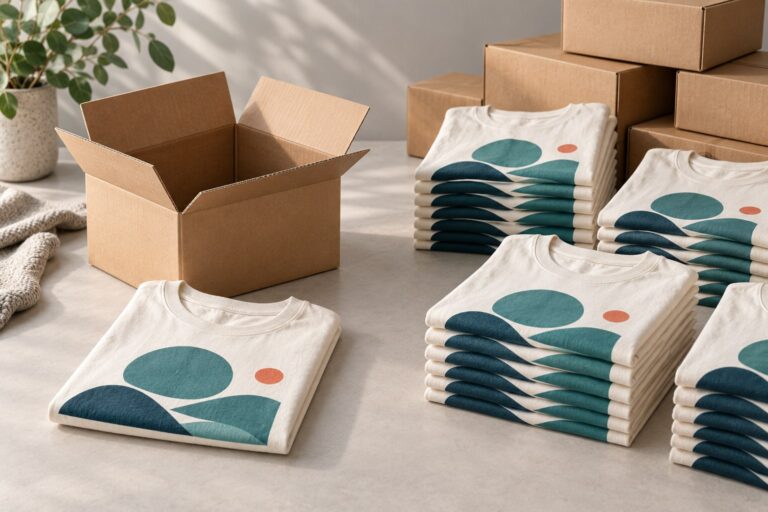
A focused launch with a documented blank and an approved printed sample is easier to manage than a large assortment with uncertain differences. Expand colours and fits when you can maintain the same product promise across them.
Frequently asked questions
Is 100% cotton always the best blank for printing?
It is a common starting point for many graphic T-shirts, but the best choice depends on the surface, colour, artwork, print process and intended use. Test the finished combination.
Does a higher GSM mean a sharper print?
No. Weight and print surface are different properties. Compare the construction and actual decorated sample alongside the GSM specification.
Can the same design look different on a heather shirt?
Yes. The fabric colour, composition and preparation can affect the result. Approve the specific heather garment rather than relying only on a sample in another colour.