Product planning guide · Print Logistic
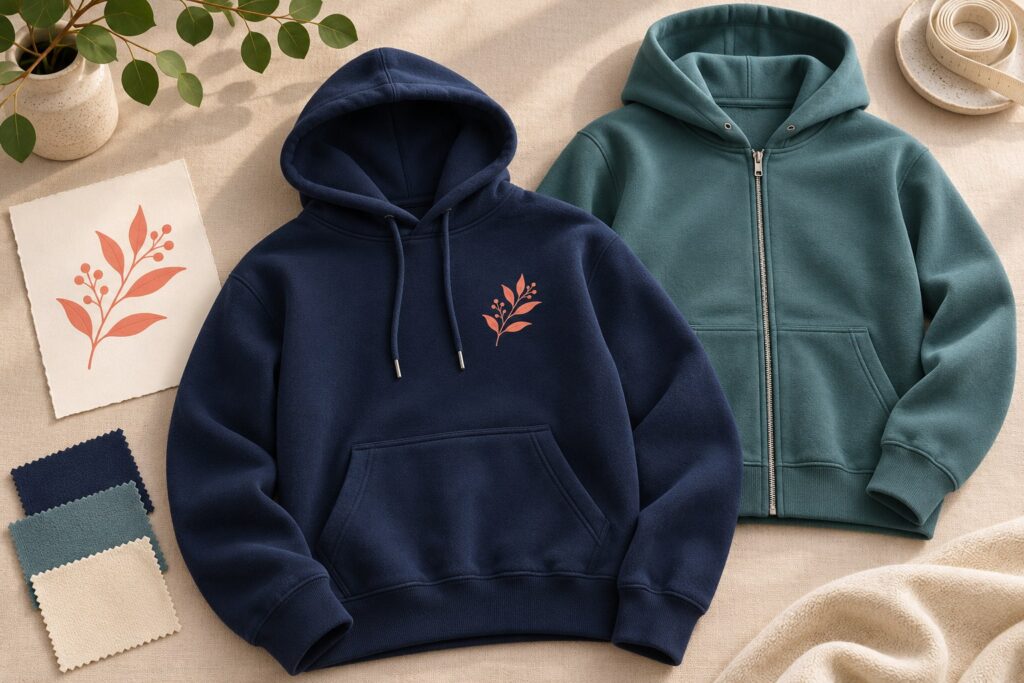
Custom hoodie printing starts with the garment, not a rectangular mockup. The hood, pocket, zipper, fabric face and seams all influence what can be decorated. Choose the exact style before approving artwork dimensions or promising a placement to customers.
Specify the hoodie before choosing the decoration
Record the manufacturer and model, colour, size range, fibre composition, fabric weight, fit and whether the garment is a pullover or zip style. Keep the product sheet with the job. Two garments both called a heavyweight hoodie can have different pockets, seams and usable areas.
Check the fabric face as well as the overall composition. Some fleece constructions present a different fibre mix at the decorating surface. Do not infer this from the percentage on a generic product listing; confirm the exact style and colour.
Think about how the garment will be used. A close chest identity for staff, a large back illustration for a clothing drop and a personalised sleeve are separate decoration briefs. Start by listing the placements your collection actually needs.
If weight terminology is causing confusion, our GSM and blank-selection guide explains how to read fabric weight. Use hoodie-specific product specifications rather than applying T-shirt weight categories to fleece.
Plan artwork around pockets, zips and the hood
Ask production for the usable area on the selected garment. A flat image of the front is not evidence that every part of that area can be printed.
| Placement | What can interfere | What to approve |
|---|---|---|
| Centre front | A pouch pocket, drawcords, neckline or a zipper. | The complete artwork inside the approved clear area, on the smallest relevant size. |
| Left chest | Curvature, seams and the distance to a zipper or pocket edge. | Physical logo dimensions and a clear placement reference. |
| Back | The hood covering the top of the design when worn down. | Appearance with the hood both raised and lowered. |
| Sleeve | Taper, seams, cuffs and equipment access. | Orientation, distance from a defined seam and visibility when worn. |
| Hood or pocket | Layering, shape, stitching and access to the decorating surface. | Whether the exact construction supports that location at all. |
STAHLS’ hoodie application guide explains why bulky features can affect pressure during heat printing. A specialist setup may be possible, but a brand should confirm the result rather than prescribe a machine workaround from a mockup.
DTG, DTF or embroidery for a hoodie?
Compare complete samples rather than choosing from the technology name alone. The same artwork can produce a different surface and feel with each process.
- DTG: a candidate for detailed printed artwork on a compatible garment. Confirm the fabric, colour, preparation and supported print area.
- DTF: a transferred graphic can be considered on compatible materials and placements. Check heat response, application and the feel of large filled areas.
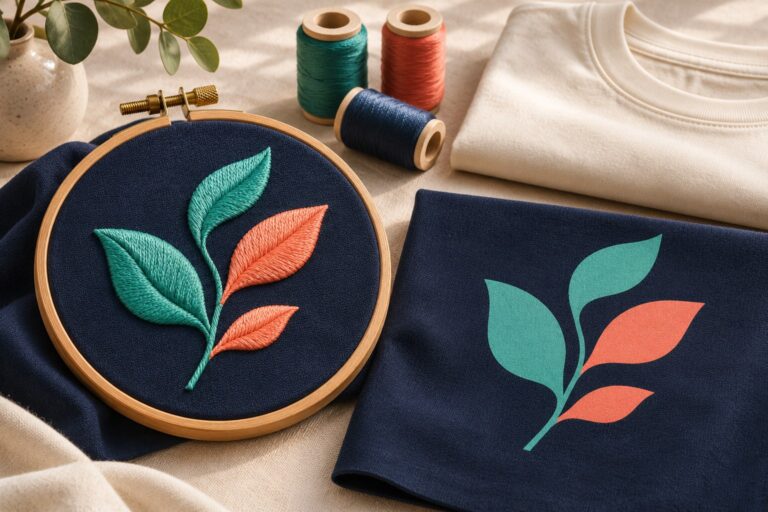
- Embroidery: a candidate when a stitched identity is part of the brief. Ask about digitising, stabilisation, access and what the back of the decoration will feel like.
The Poland production facility lists DTG, DTF and embroidery technologies. Support for your exact hoodie and placement still needs confirmation. Use our DTG versus DTF comparison or embroidery versus printing guide to prepare the sampling questions.
Do not assume that every blend, coating or garment dye responds identically to heat and treatment. Ask the team to assess the chosen variant, including the colour, before committing to a range.
Prepare a production brief that removes guesswork
A useful brief describes each placement separately. Send the source artwork and an annotated reference, not only a lifestyle mockup. The following fields make a quote and sample easier to compare.
- Garment: exact style, colour and size list, with quantities where known.
- Artwork: a clear file name and version for each location.
- Dimensions: intended visible width and height, with units. Do not rely on screen zoom.
- Placement: the agreed measuring reference, orientation and clearances from construction details.
- Colour: reference artwork and the physical approval process for important brand colours.
- Finishing: requested labels, inserts and packaging, with availability to be confirmed.
- Order model: individual orders, a coordinated run or a combination, plus selling destinations.
For printed artwork, follow the selected product template and current production specification. Our print-file preparation guide is a starting point; a general resolution or file format is not permission to exceed a hoodie’s usable print area.
Ask whether the artwork needs a size rule across the range. Keeping one physical width and scaling the design by garment size are different choices. Agree which rule will be used before approving customer-facing mockups.
Approve the hoodie as a worn and washed product
Inspect the sample on a person or a suitable form as well as flat on a table. A design can look centred in a photograph while sitting awkwardly when the pocket is filled or the hood is down.
- Check how the graphic relates to the neckline, drawcords, pocket and hem.
- Assess the back graphic with the hood in both positions.
- Inspect edges and fine lettering at the actual print size.
- Handle the decoration and check the inside where relevant.
- Open and close a zip garment, and confirm that decoration does not obstruct its use.
- Follow the agreed care procedure, then recheck print, fabric and fit.
- Record which variations need another sample before launch.
Madeira’s stabiliser guidance explains why embroidery support materials must suit the fabric and design. This is another reason to approve the finished hoodie rather than an embroidery file alone. Keep the physical reference with the sample approval record.
Choose a launch model after approving the product
Count variants before placing a batch: colours multiplied by sizes and designs can create more stock decisions than the collection name suggests. For example, two colours, five sizes and three designs create 30 combinations if every design is offered on every colour and size.
Use POD versus bulk production to compare demand and stock commitment. Multiple placements and finishing also belong in the complete cost model.
Shortlist hoodies in the product catalog. Discuss a coordinated collection through Wholesale, or an individual-order workflow through Snapwear. Confirm the supported product, decoration and routing before publishing a delivery promise.
Custom hoodie printing questions
Can I print a continuous graphic across a hoodie zipper?
Do not assume it is supported. The zipper changes the decorating surface and alignment. Ask production about the exact style; separated left and right artwork may need a different specification from a continuous front graphic.
Where should a back print sit?
Approve it on the actual garment with the hood down and up. There is no universal distance that suits every hood shape, size and artwork.
Can I use my T-shirt artwork on a hoodie?
The source artwork may be reusable, but its size and placement need another check. Pocket height, hood coverage, fabric and process can change the finished result.
Plan your production with Print Logistic
Send the exact hoodie model, colour, size range and proposed placements. We can discuss the artwork, sample and production options for your collection.
Discuss your production planReferences and further reading
- STAHLS': heat printing around hoodie construction
- Madeira: embroidery stabilisers and fabric compatibility
- Print Logistic: technologies at the Poland facility
Prepared 3 November 2026. Product availability, specifications and decoration options should be confirmed for the selected workflow. Cover image: editorial illustration.